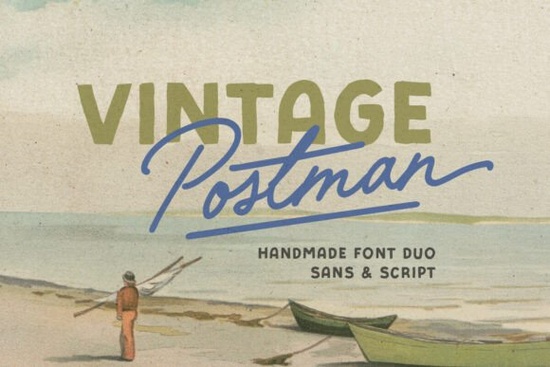
If you're looking for a font that brings authentic retro charm without feeling overused or dated, the Vintage Postman Font is a thoughtful choice especially if you work on posters, small-batch branding, quote art, or handmade packaging. It’s not just one font but a carefully paired duo: a bold, clean sans-serif and a relaxed monoline script. Both were drawn by hand, so they carry subtle imperfections that make them feel human not sterile or overly polished.
What makes Vintage Postman different from other retro fonts?
Many “vintage” fonts lean too heavily into distressed textures or exaggerated serifs. Vintage Postman avoids that trap. Its sans-serif has sturdy proportions and even spacing ideal for headlines or logo lockups while the script flows with gentle rhythm, not forced flair. What really sets it apart is how well the two styles complement each other: the script isn’t fussy, and the sans doesn’t compete. They sit comfortably side-by-side in layouts, whether you’re designing a café menu, a wedding invitation suite, or a limited-run t-shirt collection.
The font includes stylistic alternates and ligatures small details that help avoid repetition when using the script across longer phrases. You’ll also get connecting lines (like underlines or decorative strokes) built right into the script font, so you can add visual interest without layering extra graphics. And because it supports multiple languages including extended Latin characters it’s practical for creators serving international audiences or bilingual communities.
Who uses this font and where does it fit best?
Small business owners who print their own labels or design seasonal packaging often reach for Vintage Postman when they want warmth without whimsy. Print-on-demand sellers use it for vintage-style wall art or greeting cards that stand out in crowded marketplaces. Crafters appreciate how legible it stays at small sizes think jar labels or embroidery transfers while still holding character.
It works especially well alongside other hand-drawn typefaces. If you like the relaxed energy of Quincy Font, you’ll find Vintage Postman shares its quiet confidence but with more contrast between weights. Fans of Randy Sofia Font might enjoy how Vintage Postman’s script keeps things simple and grounded, while still offering enough variation to keep layouts fresh. For farmhouse or rustic themes, it pairs nicely with Farmhouse Pumpkin Font, though Vintage Postman leans slightly more mid-century than country-kitchen.
How to use it without overdoing the “retro” vibe
Retro doesn’t have to mean “old-timey.” Try pairing Vintage Postman with a neutral, modern sans-serif (like Inter or Poppins) for balance let the script handle personality, and let the supporting type stay quiet. Use the bold sans for section headers and the script only for short, meaningful phrases: a shop name, a tagline, or a single inspirational word.
Avoid stacking both fonts in the same line unless you’re intentionally creating contrast (e.g., “EST. 1987” in the sans, followed by “Handcrafted Goods” in the script). And remember: less is more with ligatures. Enable them selectively only where they improve readability or flow not as a default across every word.
Other script fonts worth exploring
If you’re building a toolkit of versatile handwriting-style fonts, consider how Vintage Postman fits alongside others. Casual Handwriting Font offers looser, more playful energy great for youth-oriented brands. For something with stronger calligraphic roots, Vintage Postman Font gives you structure without stiffness. You’ll also find similar warmth in Vintage Postman Font, Quincy Font, and Randy Sofia Font.
Before downloading, check the included language support especially if you plan to use accented characters or non-English punctuation. All versions include basic OpenType features (like standard ligatures and alternates), but full functionality depends on your software. Adobe apps and Affinity Designer handle them well; free tools like Canva may only access the base glyphs.
Quick checklist before you use it
- ✅ Test both fonts together in your layout don’t assume they’ll pair well without seeing them in context.
- ✅ Turn on OpenType features selectively start with standard ligatures, then add alternates only where needed.
- ✅ Avoid using the script for body text or long paragraphs it’s designed for impact, not endurance.
- ✅ Check licensing: the personal license covers most hobby and small-business uses, but commercial resale (like selling editable templates) requires an extended license.
- ✅ Preview how it looks printed not just on screen since monoline scripts can thin out or blur at low resolutions.
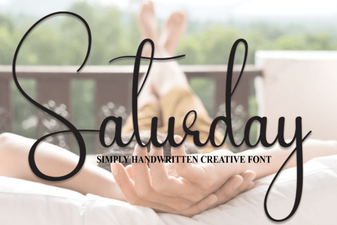 Saturday Font: Creative Project Ideas & Free Downloads
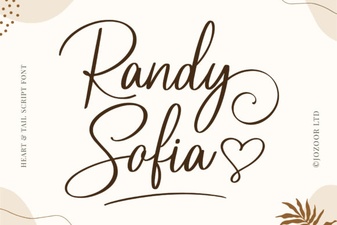 Randy Sofia Font: Creative Display Typography Projects
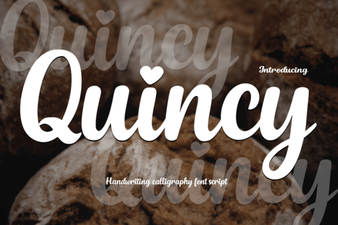 Discover Quincy Font: Designs, Applications & Creative Uses
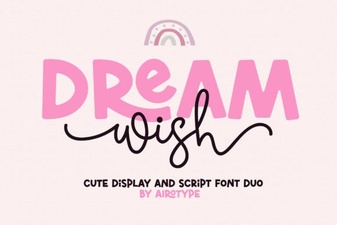 Dream Wish Font: Free Creative Typography Download
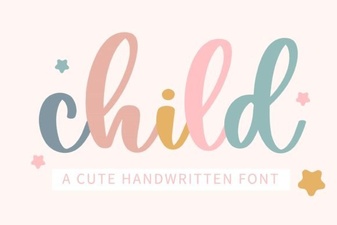 Creative Fonts for Kids' Books & Designs
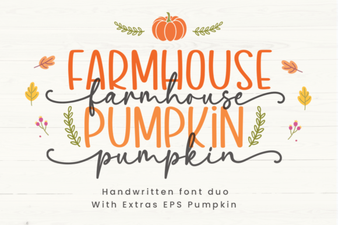 Design Ideas Using the Farmhouse Pumpkin Font